The ocean part of the Open Water course is four dives at Pulau Pramuka, in the Thousand Islands north of Jakarta. Two of them are on the harbour reef. Visibility is usually five to ten metres. People hear "reef" and picture something else. Then they get in and the water is green-blue, and there is no manta, and they wonder if they missed it.
You did not miss it. That reef is not a big-animal site. What it has, if you stop swimming, is small.
Start with the anemone
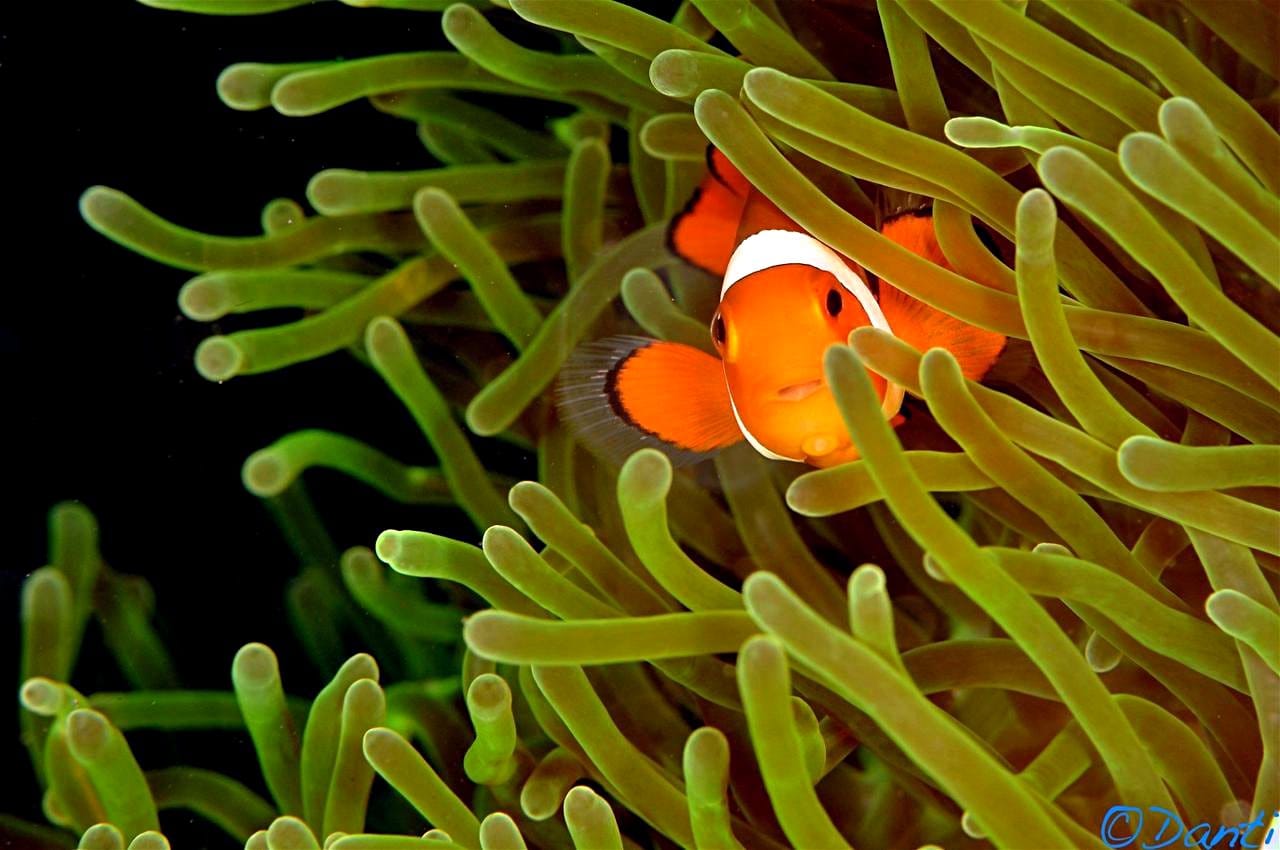
The fish most people call Nemo is a clownfish, and it does not wander. It lives in an anemone. Find the anemone and you have found the fish. On the harbour reef that is the reliable subject: a pale or green anemone on the coral, and one or two clownfish that duck into the tentacles the moment a fin comes too close.
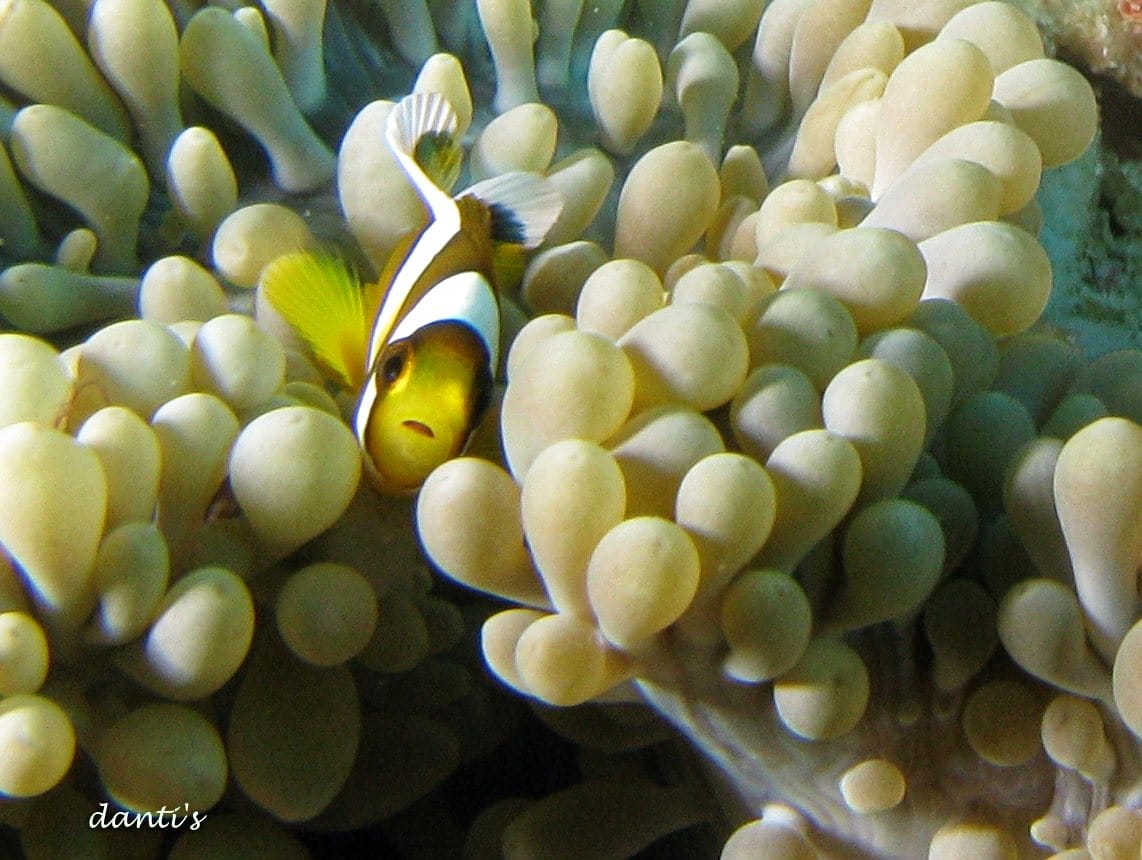
A clownfish in a pale anemone. Get close, then stop. Chasing it only sends it deeper into the tentacles.
Do not touch the anemone, and do not fan it with your hand to "make the fish come out." Hover, breathe, and wait. They come back out. They always do. The shot above is the idea: fill the frame with the anemone, and let the fish sit in it.
Then look at what the anemone is sitting on
Once you can hold still, the rest of the reef shows up. A nudibranch is a sea slug, usually the size of a fingernail, often brighter than the coral it is crawling on. A sea squirt looks like a sponge with a hole until you notice it. Neither of them swims away from you. You swim away from them, which is why most divers never see them.
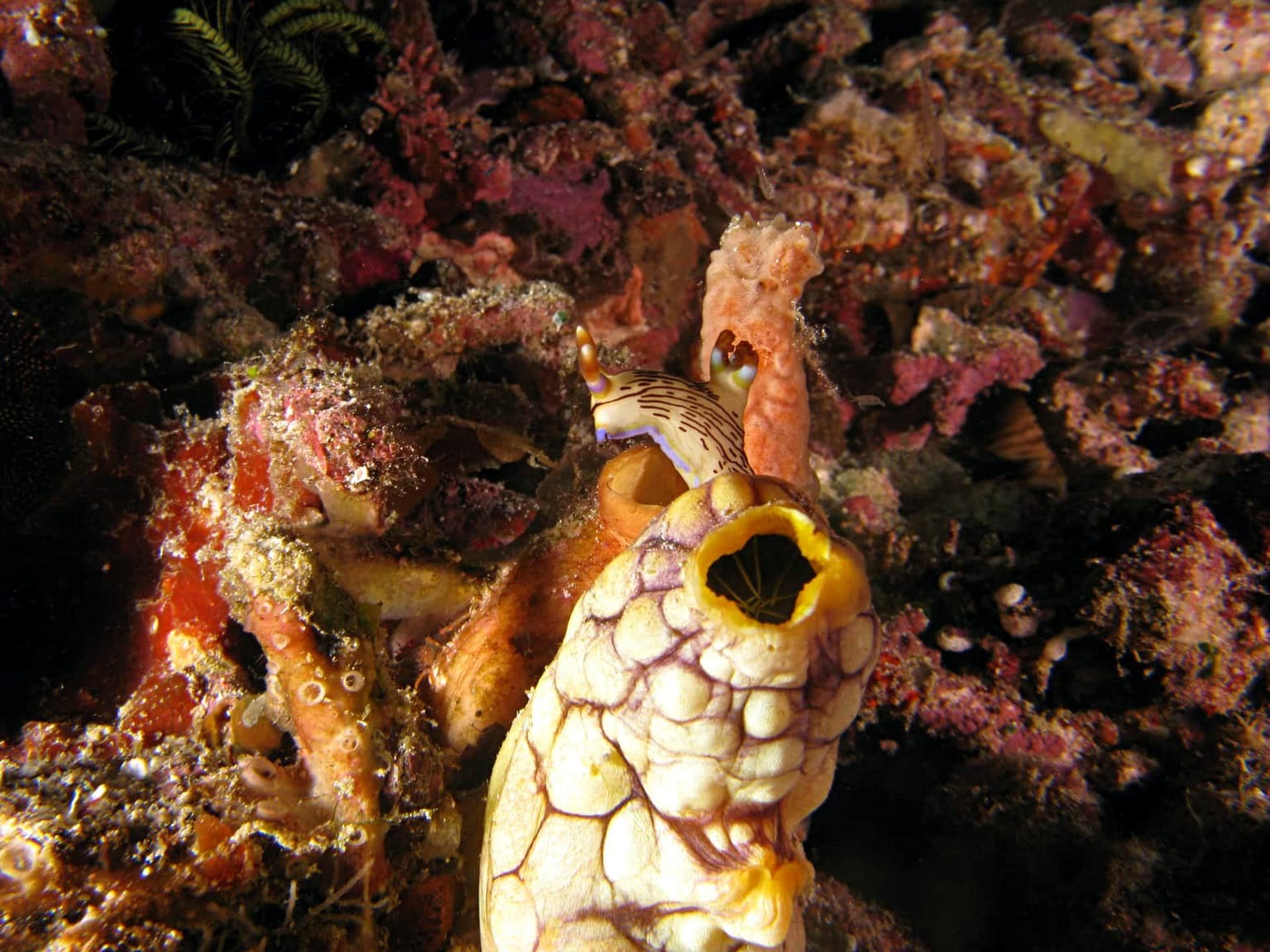
A nudibranch beside a sea squirt. This is the scale. If you are still scanning the blue for a turtle, you will pass both of them.
A peacock mantis shrimp is the other end of the same habit. It lives in a hole and watches you with those stalked eyes. The orange mass in front of this one is a clutch of eggs. You only see that if you are already low, already slow, and looking into holes instead of over them.
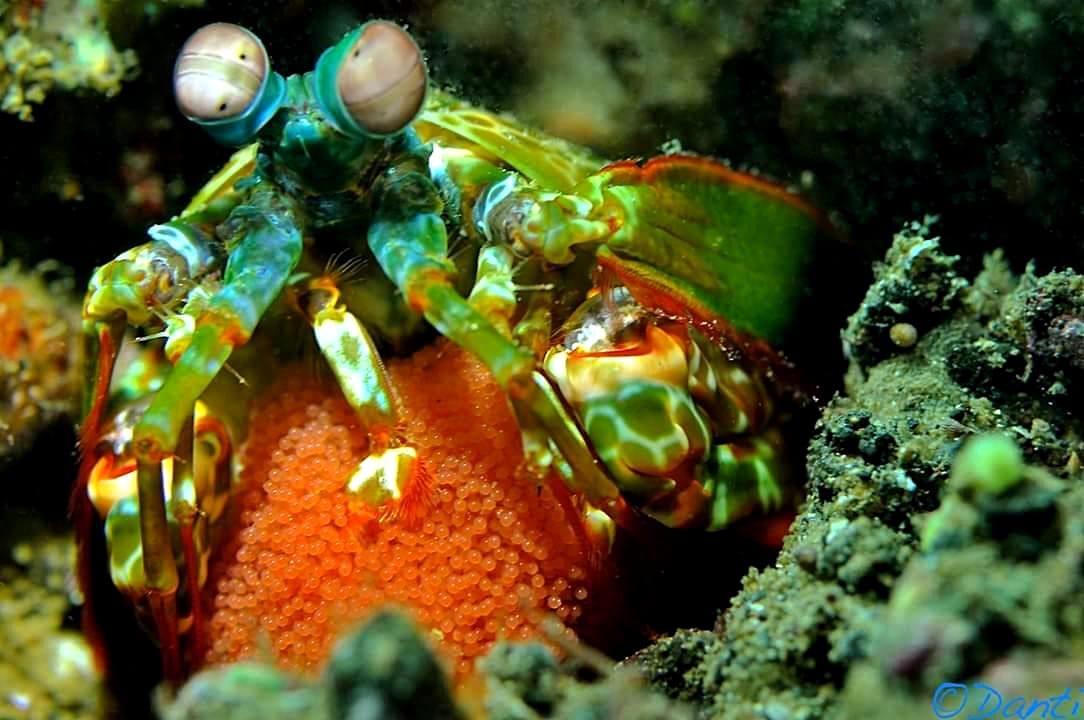
A peacock mantis shrimp guarding eggs. These photographs are the animals worth stopping for. On one Pramuka weekend you will not tick off every one of them. You will find the clownfish. The rest is what the same way of looking turns up, on this reef and on better ones later.
How to actually see it
The four certification dives exist to consolidate your skills, not to be the best diving of your life. That is still true. The useful skill on this particular reef is buoyancy. If you are fighting to stay off the bottom, you cannot look at anything smaller than a fish. Get neutral, tuck in, and look under the ledge you were about to kick past.
A few things that help:
- Stay with your buddy and with the instructor. Looking at small life is not a reason to drift off the group.
- Keep your fins up. The life is on the reef, and a careless kick is how it gets broken.
- Do not touch, poke, or move anything to get a better look. The anemone and the hole are the animal's house.
- If you want a camera, bring it on a later dive. The first ocean dives are for the skills. You will see more without a screen in front of your mask.
A turtle does show up here every so often. Treat it as a bonus, not the point of the weekend.
If you want the big animals after you are certified, that is a different trip. We arrange those with our partner in Labuan Bajo. The house reef is where you learn to see what is already in front of you.